
Hi Zee. I think we need to talk about burnout…
Because I think it’s preventable and I truly believe your generation are going to be the leaders who actually solve it.
Dear Zee, I’m curious. How do you define burnout?
I asked that question online a few days ago, and the answers were all over the place. Some people described being emotionally numb, while others said it was simply being exhausted. A few admitted they weren't actually sure where the line was between being overworked and being burned out.
I can’t help but wonder: do we even have an agreed upon definition for workplace burnout anymore?
Thanks to our good friend ‘the algorithm’, I can barely scroll for 15 seconds without seeing the word pop up in my feeds. It's become the catch-all explanation for every bad day at work, every terrible boss, every overwhelming Monday and every Slack notification that makes you consider throwing your laptop directly into the ocean. (Please don't. The whales have enough going on.)
Before we go any further, a quick disclaimer: I'm not a psychologist. I'm looking at this strictly through an operational lens… the way work is designed, managed and experienced. Any my operational opinion is… that we've started using one very real issue (burnout) to frame about a hundred different workplace problems. And also… that this issue is preventable. I’ll go on…
Overworked vs Burned Out
So... what actually is burnout?
I started where every millennial starts: the dictionary. (Have you ever seen a real hardcover dictionary Zee?) Merriam-Webster defines burnout as "exhaustion of physical or emotional strength or motivation, usually as a result of prolonged stress or frustration." Not bad.
The World Health Organization takes it a step further and the definition gets much more useful. It defines burnout as an occupational phenomenon resulting from chronic workplace stress that hasn't been successfully managed. It has three defining characteristics:
overwhelming exhaustion
increased mental distance or cynicism toward your job
reduced professional effectiveness
The WHO deliberately does not classify burnout as a medical condition and instead as a workplace phenomenon. It can absolutely contribute to anxiety, depression and other health challenges, but the distinction reminds us that burnout isn't simply about an individual failing to cope. It's often about a system failing the people inside it.
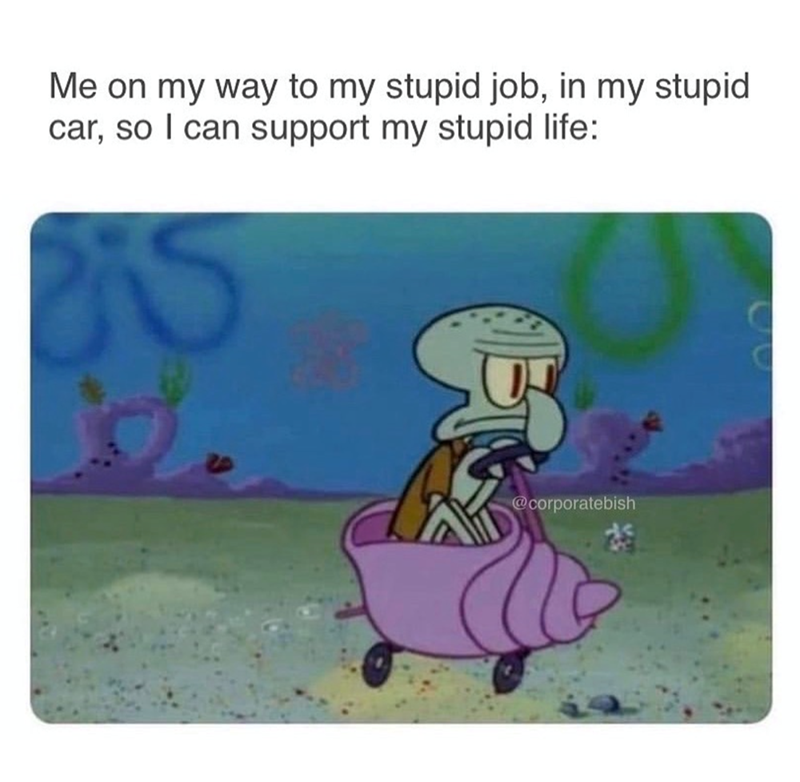
I love a good example, so let’s take a peak at two different scenarios.
Scenario One:
It's Monday. Slack starts going off and your eye starts twitching. You've already looked at your calendar and discovered someone has booked an 8:00 a.m. "quick sync" that will absolutely not be quick. You've fantasized about quitting at least three times before lunch. Is that burnout? Maybe. But I'd argue it's far more likely that you're tired.
There's a difference between needing rest and experiencing burnout, and I don't love that we've blurred those lines. If every frustrating week gets labelled burnout, we unintentionally minimize what actual burnout looks like for the people living through it.
Scenario Two:
You stopped caring. This is the one that worries me. You're not just exhausted anymore, you've become completely detached. The project you used to love? Whatever. The client having a meltdown? You respond because it's your job, not because you have anything left to give. Your manager asks if you can take on one more thing and, strangely, you don't even feel annoyed. You feel… nothing. You take vacation, disconnect and sleep without really being able to relax. Then you come back and within two days you're exactly where you started: emotionally flat, deeply cynical and convinced you're terrible at work despite evidence to the contrary. That's much closer to the definition we're talking about.
It's the combination of exhaustion, detachment, cynicism and feeling like you've lost your ability to do meaningful work. Eventually, it stops staying at the office and starts leaking into your relationships, your hobbies and the parts of your personality that had nothing to do with your job in the first place.
A Normalized Tragedy
Do you want to know what really pisses me off? Burnout has become strangely… acceptable.
At a previous contract, one of the coordinators went on immediate leave for two weeks. His supervisor shrugged and said, "Oh yeah, he's just burning out a little." A little? Imagine saying someone has pneumonia "a little." What shocked me wasn't the leave, it was how casually everyone accepted it as a normal part of doing business. There was almost no conversation about why it happened. No curiosity about workload, staffing, decision-making or whether the systems had quietly set this person up to fail.
We treat burnout like an unavoidable pattern instead of something humans created.
Burnout is also incredibly expensive. Even if you remove the human cost entirely (and I don't think you should) the financial argument is impossible to ignore.
Canadian employers lose billions of dollars every year to absenteeism, disability leave, turnover and lost productivity related to poor workplace mental health. One estimate places the annual economic burden at more than $50 billion across Canada.
Over 60% of Canadian workers report feeling burned out, and that more than 40% cite chronic understaffing and bad systems as the root cause (not just "hard work").
Replacing people isn't cheap either. Depending on the role, replacing an employee often costs between 50% and 200% of their annual salary once you factor in recruiting, onboarding, lost productivity, and training.
So when companies ignore burnout, they're rarely saving money… Instead they're just paying for later in different ways.
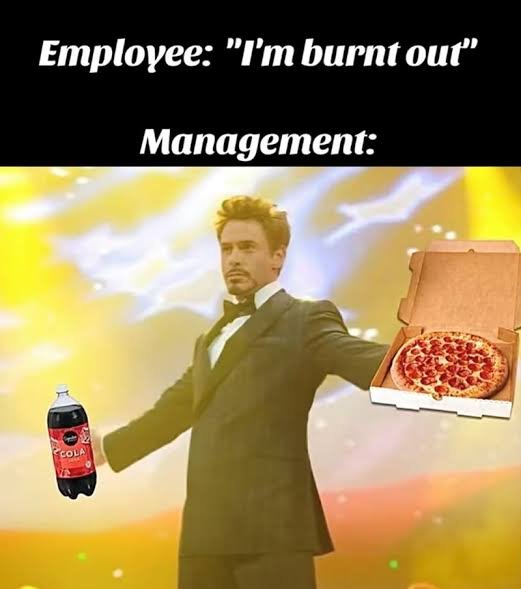
Prevention is an Operational Strategy
I think burnout is largely preventable and this is the hill I'll happily die on.
It’s true, not every stressful season can be eliminated. Deadlines exist, emergencies happen and some careers are inherently demanding. That said, chronic burnout usually isn't created by one busy week. It's created by months of unclear priorities, impossible workloads, poor leadership, constant context switching and cultures that reward availability instead of effectiveness.
If burnout is the result of chronic workplace stress that hasn't been successfully managed, then preventing it isn't about giving employees a subscription to a meditation app or another team building exercise. It’s about managing the work better.
It requires:
Realistic Capacity Planning: Stop treating human beings like bottomless productivity machines. If a team is operating at 110% capacity for six months, your operating model is broken.
Ruthless Prioritization: When everything is urgent, nothing is urgent. Leadership's primary job is deciding what not to do.
Outcome-Based Leadership: Measuring people by the outcomes they deliver, rather than who stays green on Slack until 8:00 p.m.
I applaud your generation, Zee. While you may have inherited this culture of burnout, you’re also the first generation that are actively rejecting hustle culture. You grew up watching your parents answer emails at the dinner table, carry BlackBerrys on vacation, celebrate being "crazy busy," and wear exhaustion like a badge of honour. Then you entered a workforce that somehow expected you to do the same thing while also being endlessly productive, passionate, available and grateful for the opportunity.
Today I see you forcing one of the healthiest workplace conversations we've had in decades. You're questioning the idea that success has to come with chronic exhaustion, you're asking why flexibility is treated like a perk instead of good management and you're refusing to accept that burning people out is simply the cost of doing business.
Don’t stop doing this!
Set boundaries before you think you need them. Leave work at five. Take your vacation without your laptop. Find leaders who measure outcomes instead of hours… and if and when you ever become the leader, build systems that protect people instead of rewarding whoever stays online the longest.
Burnout shouldn't be a corporate rite of passage. It’s an operational design flaw… and it’s time we eliminated it.