
Have we forgot about humans during recruitment?
This is my second post on the hiring process, I can admit I’m a little bit obsessed with beginnings. I’m a firm believer that you need to begin a relationship (whether it’s a new hire or a new project) thoughtfully. If you ever talk to me in person, I will probably go down a bunny trail on the importance of human-first hiring and onboarding for this exact reason. Unfortunately, as of late, it seems that we’re building those beginnings on a foundation of algorithms instead of human beings.
I went out for dinner with some friends this past weekend. As it seems to do more and more often, the conversation veered into the world of AI. We started talking specifically about recruitment, and the more we talked, the more it felt like we’ve entered some weird, automated game of telephone.
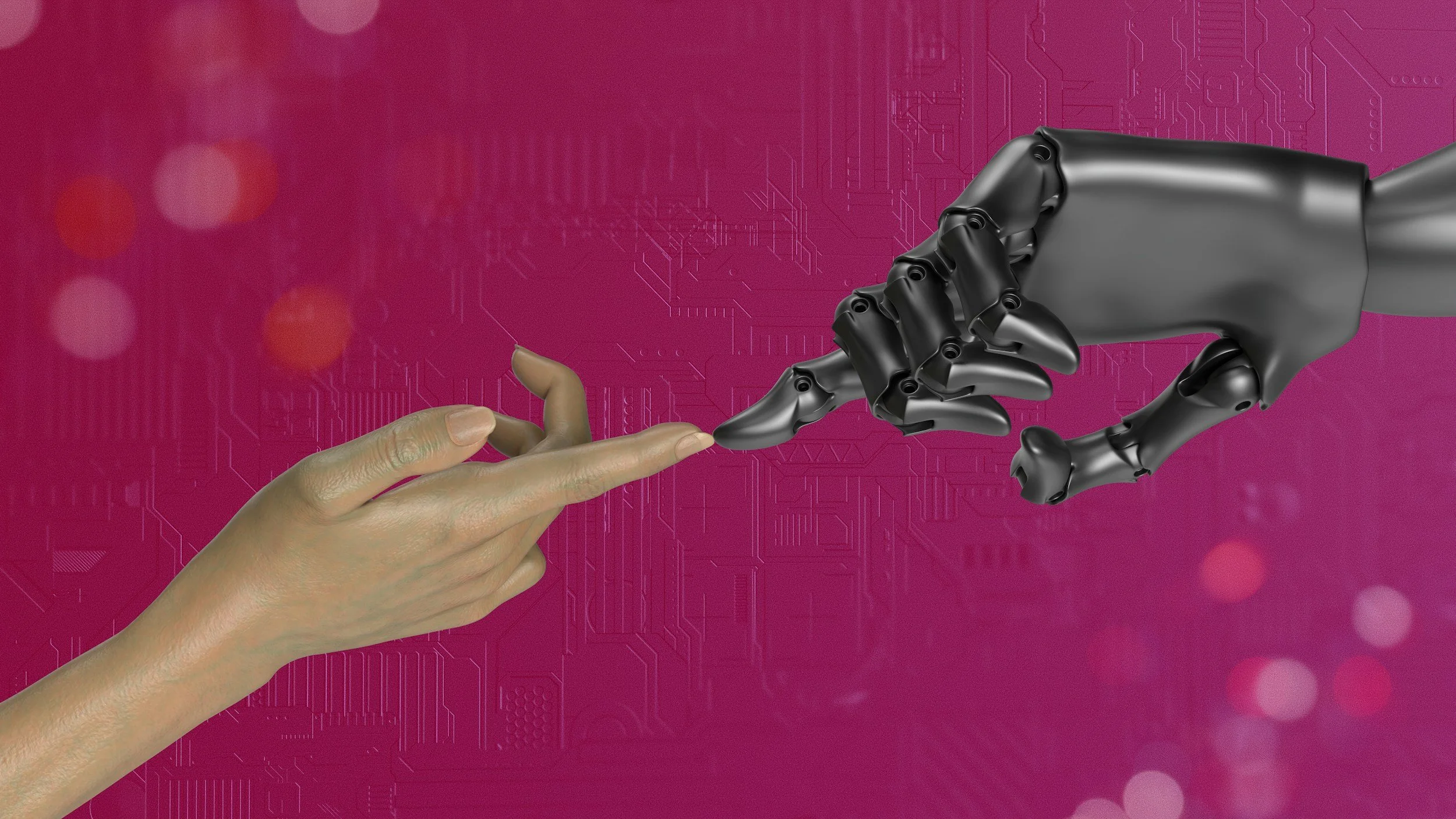
Let’s think about the current process:
The Company uses AI to draft a job description.
The Applicant plugs that description into AI to "optimize" their resume and cover letter.
The Company then uses an AI screening tool to filter those applicants.
Naturally, the AI finds a "perfect match" because the applicant’s resume was literally built to mirror the job description’s keywords. But at the end of that loop, what are you actually left with? You have zero insight into who that person really is, and the candidate has no idea what the company culture actually feels like.
We may have optimized for efficiency, but we’re also deleting the soul of the process.
It’s become a volume game. Because AI makes it so easy to churn out applications, people are applying for everything. In Canada, we’re seeing this play out in real-time. Recent data shows that nearly half of Canadian job seekers (48%) are now using AI to help them apply, and the results are exactly what you’d expect: they’re able to complete more than twice as many applications as they used to.
On the flip side, over half of Canadian employers are now fighting fire with fire, using AI to screen those mountains of resumes. It’s a loop. Companies are getting thousands of applications because AI made it easy to apply, so they then use AI to reject people because they have too many applicants.

The First Date
I like to think of job hunting as a first date. It’s supposed to be a human, personable, even a little vulnerable experience. When you’re on a first date, you’re treading gently. You’re putting in extra effort. You’re being respectful. You’re looking for the spark. Do we have common interests? Will our values actually align when things get tough? Is our vision for the future even in the same ballpark? You’re trying to figure out if you actually want to spend 40+ hours a week with this person.
In the current recruitment scenario it’s the equivalent of sending a robot to sit at the restaurant for you, equipped with a pre-programmed script of questions and answers, while the other person has a robot there to record your data and see if you meet their optimal partner criteria. (don’t even get me started on the new AI dating opportunities…) By the time the actual humans start spending time together, they might realize they don’t even like each other.
I get it. Efficiency is the holy grail of business. But we have to ask ourselves: at what cost? Sure, by the 10th date (or the third year of employment) you might stop overthinking every little detail. But when you automate the beginning, the unintended consequence is that you’re building a relationship on a hollow foundation.
But don’t cheap out on the first date.
The foundation of a good working relationship is built in those early, slightly awkward, very human interactions. When we let robots do all the ground-setting work, we lose the ability to be human. We lose the gut feeling, the nuance and the fit that a keyword-scanner will never understand. If we keep letting AI talk to AI, we’re going to wake up in a workforce where we’re all perfect on paper, but totally disconnected in person.
Let's bring humans back into the room.