
Hi Zee. How good are you at taking vacation?

I know, it sounds like a silly question, but seriously. Are you actually comfortable completely disconnecting from work? Or do you remain somewhat "available" to potential fires, answering messages from a beach chair?
Dear Zee. So… what kind of person are you. A live to work? Or a work to live?
So, I’ve been hanging out on Threads lately. It’s kind of funny because I never really did the whole Twitter thing, and once it became whatever "X" is, I deleted my account and never gave it a second thought.
Threads, though? I’m kind of liking it. It feels less polished than LinkedIn and way less performative. People seem a little more willing to disagree without immediately writing a 14-page, mostly AI-generated "thought leadership" manifesto that sounds identical to everyone else’s. Now, whether Threads will eventually help generate enough leads to buy a yacht remains to be seen, but for now, it’s a fascinating little social experiment.
Admittedly, I’m still trying to figure out the algorithm. One day you post something you’re convinced is brilliant and it gets crickets. Like zero engagement. The next day, you throw out a spicy opinion while drinking your morning coffee, and suddenly hundreds of strangers are debating corporate balance sheets and employment law in your comments. Yesterday, this accidentally happened…
Just being up front… I am not an HR professional, and I have never built a corporate vacation policy. I’m not here to quote employment legislation, and through this experiment, I learned just how wildly the rules vary - especially in the US, where many states don't require companies to pay out accrued time at all. Something to consider though, if your state law doesn't require a payout, you aren't actually "losing" cash value when switching to an open model. It frames the perk a bit differently.
Open PTO. Let’s call it The Great "Unlimited" Illusion… (so mysterious, eh?!)
I posted a Thread stating that Open PTO (Unlimited Vacation) is often a predatory cost-cutting strategy disguised as an employee perk. My argument was rooted in basic math: traditional accrued vacation is a massive financial liability for a company. Employees earn that time, and if they leave, the company legally has to pay it out (at least, that's the law up here in Canada and in a few select US states). Switch to an unlimited model, and you wipe that accrued debt right off the balance sheet.
Generally speaking, Open PTO is still pretty rare in Canada. It’s estimated only about 6% of companies offer it. This number felt a bit low to me, but the policy is still heavily concentrated in tech and marketing agencies… where I spend a lot of time.

I think the more dangerous trap the employee, like you Zee, is psychological. When a company strips away defined boundaries, employees naturally end up taking less time off because nobody wants to look uncommitted. If nobody tells you how much vacation is "normal," a strange corporate game of chicken begins. No one wants to be the person who disappears for four weeks while their teammates quietly take five days. Unlimited somehow creates invisible limits. The data backs this up. Studies have shown that employees with traditional limited plans will take an average of 15 days off a year whereas those with open or unlimited plans do take less at just 12-13 days annually.
The comments on this thread, kind of exploded. It turns out people have some very strong feelings about vacation time. Who knew!? I was admittedly unprepared for the volume of notifications!
A lot of people validated the math. They pointed out how companies implement sneaky "blackout periods" the moment PTO becomes open, or how requests suddenly get denied if leadership decides you're "abusing" the policy.
One commenter on the post shared how their mom was forced to take weeks of vacation right before retiring after 44 years at a hospital. Apparently her massive bank of accrued leave would have been too big a financial hit to the organization.
Another person shared a horror story about their husband being deemed too "integral" to ever get time off, while upper management took a month off every eight weeks.
Others noted the darker systemic data: Open PTO heavily disadvantages women and people of colour, who often face harsher cultural judgments for stepping away from the office.
Like so many things on the internet, there was disagreements. The counter-arguments rolled in, and they were just as fascinating.
I heard from people who love Unlimited PTO - and they use it aggressively… logging 30 to 38 days off a year to travel, see the doctor or just "rot on the couch" for a mental health day without micromanaging their hours.
Others mentioned companies that offer the ultimate hybrid: unlimited PTO paired with a mandatory minimum of one week off per quarter so employees don't have to guess if they have "permission" to log off.
People stuck with traditional rigid systems pointed out that the alternative can be brutal too, like earning a measly 2 weeks of PTO at a rate of 10 hours per month, forcing you to go months with zero time off just to string a few successive days together.
The thread highlighted a massive benefit to Open PTO I hadn't fully appreciated… that it can be an absolute game-changer for accessibility. For chronically ill individuals or people navigating unexpected medical emergencies, unlimited plans remove that anxiety of hoarding vacation days for doctor’s appointments or sudden surgeries. One person shared how they had to undergo four eye surgeries right after starting a new job, and unlimited PTO allowed them and their husband to handle it without financial ruin. Another person pointed out that under an open model, you don't have to deplete your hard-earned vacation balance just to head out an hour early for a dentist appointment.
How to Actually Disconnect (According to the Crowd)
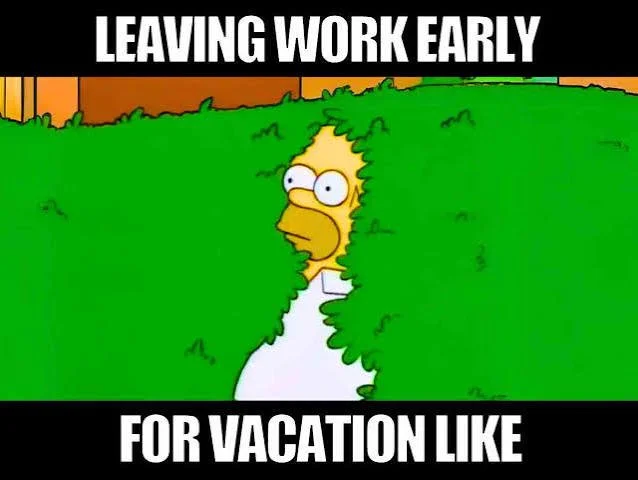
You can have the best vacation policy out there, but actually disconnecting is another story. In a recent survey an astonishing 66% of Canadians confess to checking emails on vacation because of fear of falling behind and to help prevent a mountain of work when they return. When I asked my Threads audience how they actually manage to pull off a real, unplugged vacation, the advice was beautifully practical. Zee, if struggle with the guilt of logging off, here is the crowdsourced playbook for protecting your peace:
Delete the Apps entirely: Don't just mute notifications. Several people noted that removing Slack, Teams, and work email from your personal phone is the only way to kill the muscle-memory impulse to check them.
Leverage the "Emergency" Friction: If you leave a contact method, make it a phone call. People will mindlessly tag you in a Slack thread while you're on a cruise, but when you tell them, "I will not be checking messages, call my cell if it's a true emergency," suddenly almost nothing qualifies as an emergency anymore. We live in an era where nobody actually wants to call anyone, so use that aversion to your advantage.
Run a Pre-Vacation Offload: True disconnection requires preparation. Build out clean documentation, record quick handover videos and properly train your backups before you log off. If your team feels equipped to handle things, your FOMO and anxiety can drop to zero.
Turn Off the Work Phone: If your company gives you a dedicated work device, treat the power button like a sacred boundary. The moment your Out-of-Office message turns on, that phone turns off, and it doesn't turn back on until the morning you return.
Adopt the "No One Dies" Perspective: Unless you are a surgeon, a corporate crisis is rarely life-or-death. As one commenter's director brilliantly put it: "We are not doctors, no one dies if we don't respond."
So here’s my biggest takeaway from this Threads post. Culture Trumps Policy
As the comments kept stacking up, it became abundantly clear that this conversation wasn’t actually about vacation policies at all. It was about culture.
Having watched organizations for years through the lens of an operational fixer, one of my biggest pet peeves is when leadership teams say one thing but operationally reward another. A company can splash "Work-Life Balance!" across its careers page in bold font, but employees are observant. They might read your handbook, but they pay even closer attention to your behaviour. They see who gets promoted, who gets the best projects and who gets applauded in staff meetings. Is it the person who completely disconnected for two weeks... or the person who answered emails from a beach chair?
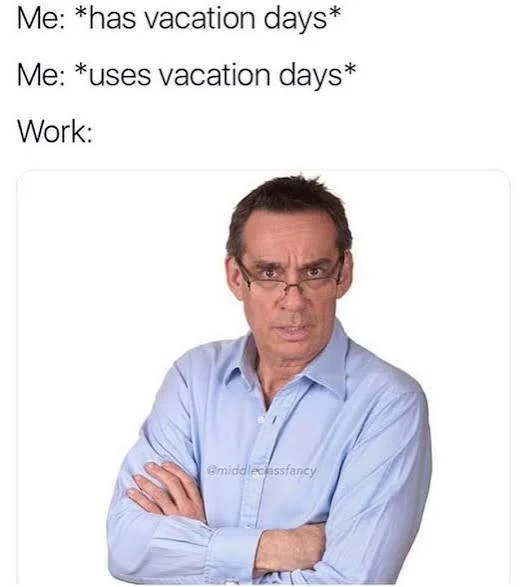
If your executive leadership or your direct manager never takes a real vacation, the unwritten rule of the company becomes: don't take a real vacation. At that point, the policy on paper is almost irrelevant because the culture is screaming that rest is a sign of weakness.
Threads provided another insight I hadn't really considered. Remote and hybrid work have messed with our heads a bit. One commenter described this weird "out of sight, out of mind" paranoia that creeps into hybrid workplaces. If you're already working from home a few days a week, a toxic culture can quietly twist Open PTO into a weapon. Because no one can physically see you, the internal narrative shifts from, "Oh, they're working from home today," to, "Wait... are they on vacation again?" It creates this exhausting need to constantly prove you're online, available and productive. Ironically, one of the greatest benefits of flexible work ends up creating even more pressure to stay visible.
And with that Zee, I’ve reached the part I care about most. This is where the systems break down.
When a company introduces Open PTO without fixing its underlying systems and culture, it's not offering a perk, it's passing the buck. It's forcing employees to guess where the invisible lines are. True alignment means your internal operations actually match your external values. If one of your company values is "We care about our people," but your projects rely on constant overtime, endless meetings and heroics to stay afloat, then your values are little more than office decor.
You cannot have a healthy vacation policy without the operational scaffolding to support it. A human-first company builds cross-training, documentation, realistic capacity planning and shared ownership into its day-to-day operations so that someone taking two weeks off doesn't send the entire business into chaos.
So, a note to my new Thriends...
Thank you. You've convinced me. Maybe Open PTO isn't the villain I originally made it out to be. I can absolutely see situations where it works beautifully. But your stories reinforced something I already believed… policies don't create culture. People, systems and leadership do.
If your organization embraces the policy, builds the operational structure to support it, and leaders actually model what healthy disconnection looks like, Open PTO can probably be an incredible benefit. Without them though, it's just unlimited uncertainty disguised as unlimited vacation.
Redesigning Rest
Vacation policies will always come in different shapes and sizes. Some countries treat paid time off like a fundamental human right, while others treat it like a premium luxury. Some organizations implement mandatory company-wide shutdowns for a week or two (which I think is the gold standard because it means everyone disconnects simultaneously, and you don't return to a mountain of unread emails)
True flexibility isn't about the specific policy on your contract. Through this discussion it became very clear that the best places to work in the future won't be the ones with the flashiest perks on paper. They will be the truly flexible workplaces that pair proper accountability systems with high internal trust.
So Zee, as your generation eventually climbs the ranks to become the managers, executives and founders of the future workforce, my hope is that you don't just focus on redesigning work. I also hope you also focus on redesigning rest.
The ultimate goal of a modern, human-first workplace shouldn't just be creating systems that allow people to work flexibly from anywhere. Maybe the real goal is building a culture where people feel secure, valued and trusted enough to feel completely comfortable being nowhere near work at all. Now go turn off your notifications Zee, you’ve earned it!