
Hi Zee. Is working 9 - 5 really your worst nightmare?
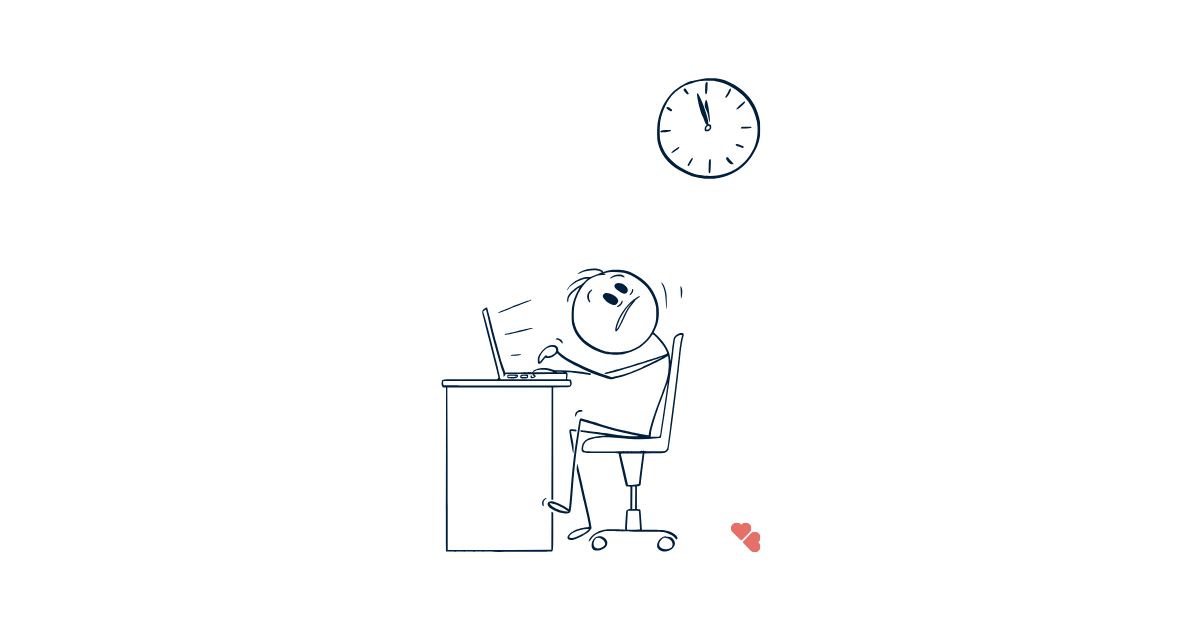
I see this is a bit of a social trend right now. Young people sharing videos about how the thought of spending decades working a traditional 9-to-5 is really ruining their 5-9.
Dear Zee. I hear you. Spending decades working a traditional 9-to-5 can sound a little miserable.
You and your friends have taken to social media in the way your generation does and made it clear working all day, 5 days a week is your worst nightmare. (A+ for the creativity in some of these posts though Zee. I lol’d a few times.) What I find interesting about all of this is the quiet shift in what people are actually saying underneath the jokes and TikToks. If we’re going to work 9–5, we better find some level of fulfillment in it, because 90% of our day should not be spent in offices just to come home too exhausted to be a person. We can only really tolerate 9–5 if the 5–9 is a place where we can actually breathe, reset and feel like ourselves again.
The backlash you’ve been receiving for expressing these thoughts has been pretty harsh. The internet unfortunately responded exactly how I’d expect: Gen Z is lazy, nobody wants to work anymore, welcome to adulthood, try paying a mortgage, every generation has had to do things they don't like, bla bla bla…
While I don’t think the 9 - 5, 5-day work week will shift tomorrow and we’re probably stuck with it for a bit, I really do see your point. I hear a generation once again (and rightfully so) questioning whether or not the traditional work model still makes sense. It’s not unreasonable and I’m here for it.

The 9-to-5, 40-hour work week has become so normalized that we rarely stop to ask why we do it. We treat it as though it emerged from nature rather than the reality that it’s a system that was designed by humans for a particular time and place. A place where families could often live on a single income and someone was typically home managing the household and day-to-day life. I think it’s time to recognize that much of modern work no longer resembles the world in which these structures were created. Technology, society and the economy have evolved significantly, yet somehow we still expect everyone to organize their lives around the same schedule. In reality, many people are effectively working two full-time jobs: the 9–5 itself, and then the ongoing job of keeping their actual life functioning.
I think part of the reason young people are questioning the model is because the promise attached to it feels increasingly unreliable. Previous generations were sold a fairly straightforward deal: work hard, be loyal, climb the ladder, buy a home, build a comfortable life, retire someday. The hours were never the attraction, the outcome was. Today, many young workers look at skyrocketing housing prices, stagnant wages, recurring layoffs, increasingly absurd hiring processes, the looming impact of AI, and they're really questioning the stability of it all. Good! You should be.
Older generations underestimate how much uncertainty you’ve grown up with Zee. Many of you have entered the workforce during a period where layoffs became normal, contract work expanded and loyalty between employers and employees became super transactional. You’ve watched companies celebrate workplace culture one week and conduct mass layoffs the next. It's difficult to convince anyone that stability comes from a system that often appears unstable. While you’re experimenting with freelancing, side hustles, remote work, content creation, digital nomad lifestyles or portfolio careers, I don’t think you’re running away from work at all. I think you’re responding to a very present risk. Diversifying income almost becomes common sense when you break it down.
Here’s what I think. More companies need to seriously start considering alternative approaches to the 5-day, 9 - 5 work week. (So thank you Zee, for forcing that conversation to become more and more common.) A few data points for you… (because I like data)
A 32-hour work week often maintains or even improves productivity while significantly reducing employee burnout. 43% of employees reported a positive increase in mental health after transitioning to a 4-day workweek.
The typical employee is only productive for only 2 hours and 53 minutes per workday
Workers who had greater control over when they started and stopped work increased productivity by as much as 50%.
A 2024 review of flexible work arrangements found a significant positive relationship between flexibility and employee performance, along with improvements in job satisfaction, organizational commitment and work-life balance.
Remote work days still account for roughly 26% of paid workdays, compared with just 7% before the pandemic.
We’ve already seen evidence that alternative approaches can work. The pandemic forced one of the largest workplace experiments in history and, despite everyone's desire to endlessly debate remote work, it did prove that many jobs can be done effectively without forcing people into the same building at the same time every day.

In the UK, a trial involving 61 companies and nearly 3,000 workers found that reducing the work week to four days improved employee wellbeing without harming company productivity. A year later, 89% of participating organizations were still operating with the policy and over half had made it permanent. Many reported benefits in employee wellbeing, recruitment, retention and productivity. (Check out the UK’s Four-Day Week Pilot)
We are seeing a growing interest in compressed work weeks, flexible schedules, hybrid arrangements and four-day work weeks. In many cases, productivity remains stable while burnout decreases (win-win!). This shouldn't surprise us, because everybody is different. Coming from the marketing industry, I can tell you that creative people are among the toughest people to fit into a corporate box. You never know when a brilliant idea is going to hit you. I’ve had colleagues who do their best thinking after midnight working solo and others who thrive on structure, collaboration and being around colleagues. I don’t believe there’s a wrong time or place to work. Yet so much of our workplace design assumes that productivity looks exactly the same for everyone.
Beyond productivity, there are some pretty practical reasons to question our obsession with standard schedules. We’ve built a system where actually living your life often means stepping away from the job that’s supposed to support it. Healthcare appointments, banking, childcare, life admin… all of it still runs like everyone has unlimited flexibility inside a very tightly locked 9–5 window. Something feels off about that. A more flexible, adaptive approach to scheduling feels necessary if work is actually going to coexist with real life instead of constantly competing with it.
And don’t forget the roads. Many communities probably have enough roads, transit capacity and parking spaces for the number of people who need them. The problem is that we've synchronized everyone into the same commuting pattern. We all arrive and leave together, but get pissed off when traffic becomes unbearable.
I don’t believe the future of work will be one universal solution. Some people will continue to love traditional careers, some will prefer remote work, some will choose compressed schedules and some will lean towards portfolio careers or entrepreneurship. The goal isn't to eliminate the 9-to-5, instead it’s to have more conversations and some experimentation with other valid options that might just fit people’s lives better.
So Zee, ignore the critics that keep framing this 9-5 thing as a work ethic issue. They assume your generation is rejecting responsibility when, from where I'm sitting, you’re asking a much more interesting question. If work is supposed to support life, why have we built so much of life around work?
For now, if you’re stuck in a 9–5, I encourage you to learn to manage your 5–9. And no, I don’t mean like the social posts. While staring at a wall after a full day of work because you’re too tired to do anything else is funny in a reel, it’s also exposing an uncomfortable reality. What I mean is that separating your identity from the workplace is important. The moment your job becomes your identity, it’s very easy to forget you were supposed to be building a life, not becoming a resource. Be your own you, and keep remembering why you’re working in the first place. Don’t let the job become you.
From someone who thinks a 4-day work-week wouldn’t hurt anyone,
Amanda
P.S. If you think your company might be ready for a 4-day work-week, we’ve put together a helpful resource here.