
Hi Zee. Do you know who to trust?
Information is easy to find, but knowing who to trust is a way bigger challenge.
Dear Zee, it’s wild just how many answers there are to the same question, isn’t it?
I really, truly don't envy you.
And not because the job market is a chaotic game of standing out in a screening tool, or because the housing market is unobtainable… or even because AI is currently redefining every career path. Yes, those things definitely suck, but I think there’s an even greater barrier that you’re facing every day. You have inherited a world where there is so much information! The hardest part isn't finding it, the hardest part actually knowing who the hell to trust.
Answers to every imaginable question are available in seconds and every opinion has a built-in audience. I ask this question seriouslly… what even is thought leadership anymore? Every self-proclaimed expert has a podcast, every influencer has a course and AI can sound freakishly authoritative and trustworthy. Yet here we are… despite having access to more information than any generation in human history, the absolute truth is more challenging to find than ever before.
Maybe one of the reasons I’m so obsessed with the state of work, systems and communication is because I unknowingly started my career at the tail end of something humanity is quietly losing… a shared reality.
Extra, extra, read all about it
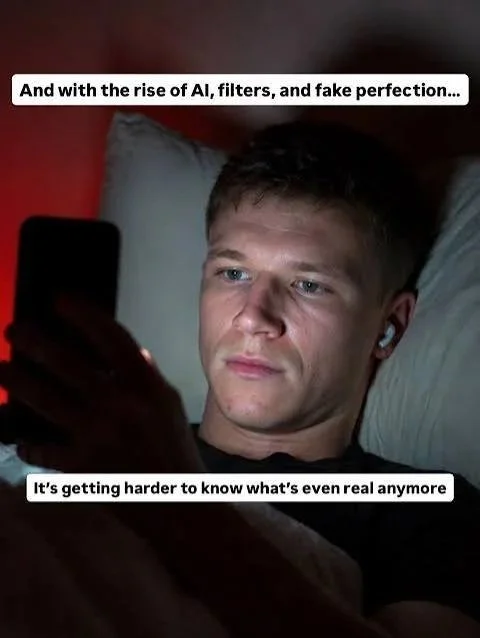
I think I might have mentioned this before, but my first job was in a community newspaper in rural Alberta. (ironically Jane’s first job was also at a community newspaper, but in Whistler. Coincidence?) Beyond the nostalgia and small town vibes, those papers did something important for the community. The newspaper gave everyone a common starting point. Everyone in town read roughly the same stories. We read the same hockey scores, the same local council drama, the same obituary page and the same police report about someone taking their horse through the Dairy Queen drive-thru (true story, it actually happened).
Those papers weren't perfect. They had biases, they got things wrong and they were limited by the perspectives of the few people running them. What they did do, though, was create shared context. Even when neighbours disagreed about politics or taxes, they were still arguing from the same basic set of facts.
Unfortunately (or fortunately, I guess it depends on how you look at it) you didn’t inherit that. You Zee, inherited algorithms. Today, instead of a shared front page, everyone has a highly personalized feed of varying versions of the truth. Two people can sit in the exact same room, witness the exact same global event and walk away with very different understandings of what happened. Their phones delivered different, optimized interpretations of reality.
Now, generative AI is accelerating this at warp speed. We’ve entered an era where photos can be fabricated, voices can be cloned and "thought leadership" pieces can be generated in seconds. For most of human history, seeing was believing. Now? I think even evidence feels a bit negotiable.
I’m not a therapist and will never claim to be an expert in this area, but even I can recognize that this environment can lead to low-grade psychological exhaustion. When institutions, media and experts lose their baseline credibility, people stop trusting anything at all except their own curated circles and emotional instincts. Your generation isn’t just being asked to process information, Zee. You’re also constantly being tasked with verifying if that information is even accurate.
The Death of the Filter
When I was growing up, if you wanted to share an idea with the world, you had to go through somewhat of a "gatekeeper." These were the people who held the keys to the gates of public attention… think book publishers, newspaper editors, television executives and even university board members. If they didn’t think your idea was worthy, accurate or profitable, it never made it into the eyes of the general public.
I’ll caveat this right now: these old-school filters had massive problems. They excluded diverse voices, protected outdated power structures and sometimes got things wrong. But they also filtered out a lot of noise.
Today, those filters are gone. The lack of information gatekeepers is both really beautiful… and also kind of terrifying.
We are actively watching traditional media outlets crumble, lay off journalists in droves and go bankrupt, while individual influencers with ring lights and zero editorial oversight flourish. The systems that used to at least try to verify facts are being replaced by an economy that rewards whatever gets the most clicks.
Without those filters, everyone can publish, everyone can teach and everyone can become a "thought leader." (Look at me! As usual, the irony is not lost on me.)
We’ve become remarkably good at sounding credible.
Historically, becoming an expert required years of experience, visible mistakes and being scrutinized by your peers. Today, someone can use AI to write a compelling newsletter, design a professional report and script a polished video essay before they’ve actually done any of the real-world work they're speaking about. I don’t blame AI for inventing fake expertise, but it has definitely made it way easier to imitate.
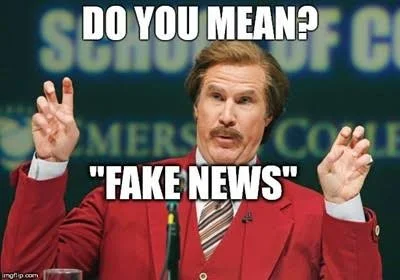
Because the old institutions have collapsed and the internet has become a bit of a free-for-all, society has done something incredibly unfair to your generation. We have left the burden of fact-checking up to you. If you don't actively audit the information entering your brain from your feed, you will easily get swept up in polished ‘fake news’ that’s everywhere.
Zee, this is why critical thinking is no longer just a nice-to-have academic skill. You will need it to survive. I have spent so much time teaching my GenZ daughter about the importance of fact checking and questioning everything she reads. It makes me sad that I have to do this, but I think it’s going to be essential.
Critical thinking used to be about finding the right answers. Today, it’s about having the discipline to slow down, ask who benefits from you believing something and resist the urge to let a convincing 15-second video instantly become factual.
Every generation inherits the technology of its time. Yours inherited a full-blown crisis of what’s real and what’s not. My hope for your generation, Zee, is not that you become better at creating content. It’s that you become better at building credibility and look at everything with a bit of skepticism.
If I could offer some advice as you navigate the information overload you have landed in…
Choose curiosity over certainty. Never be afraid to ask questions before drawing hard lines.
Value evidence over confidence. Don't mistake a polished personal brand for proven competence.
Prioritize experience over performance. Look for the leaders who have the scars, not just the pretty slide deck.
Use AI to challenge your assumptions, not to do your thinking for you. Use it to explore new perspectives, but please don’t use it to automate your voice.
Trust your gut. Don't let algorithms decide what makes you angry, what makes you anxious or what you believe to be true.
Maybe your generation will be remembered as the ones who redefined what trust is, rebuilding what it means in a world where so many versions of the truth exist all at once. In a world where absolutely anyone can sound convincing, the people worth following will be the authentic ones who prove, through consistent action over time, that they are worthy of it.