
Hi Zee. Did you know your brain wasn't built for this tech world?
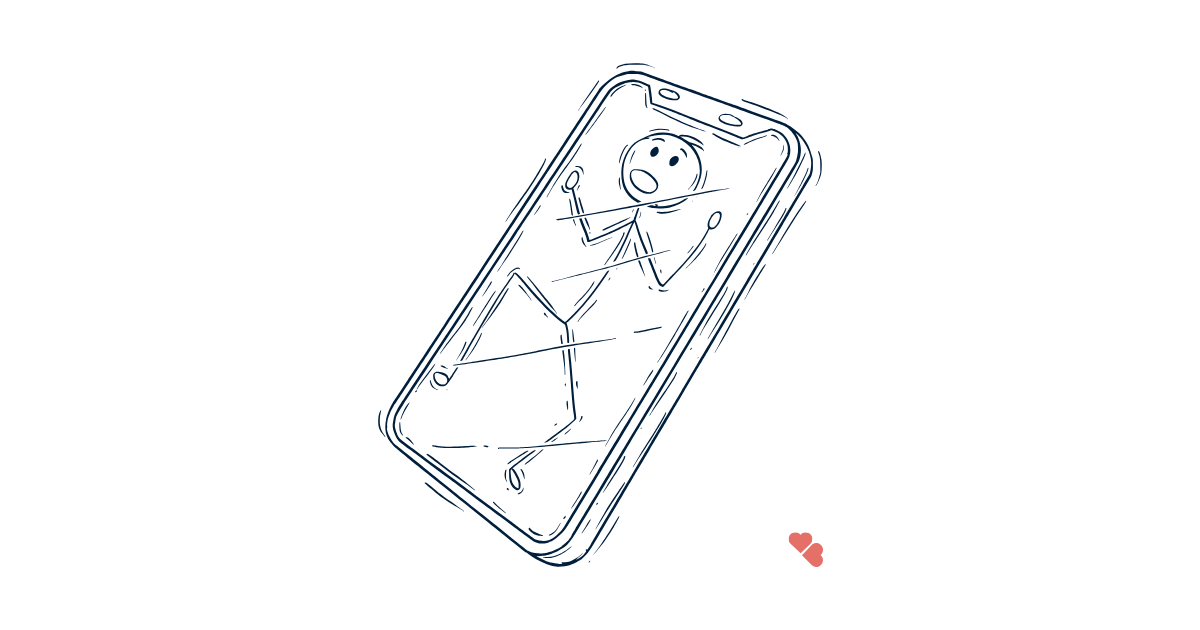
You inherited a world of permanent stimulation, endless information and always-on work. While very convenient, it's also kind of crappy.
Dear Zee. Your generation didn’t adapt to technology the way mine did. You were born into it.
You’ve never known a world with out instant answers, endless notifications and algorithms. You inherited technology and instant information.
It didn’t happen overnight, but in reflection, it did happen pretty darn fast. Somewhere between dial-up internet and smartphones, humanity quietly transitioned into an always-on operating system. Older generations (like me!) were able to experience this transition gradually. You just never knew life without it.
Yes, there was a time before the internet.
Before Google, before smartphones and before social media, we had encyclopedias. Actual physical books. These were massive shelf-sized collections that salesmen used to sell door-to-door as artifacts of human knowledge. Most families had a set somewhere in the house and libraries always housed the newest editions. If you needed to research something, you physically looked it up alphabetically and hoped the information wasn’t already outdated by the time it reached print. Old school communication (remember, newspapers were the primary source of news at one point) had pauses built into it and waiting was normal.
Then came dial-up internet. Seriously Zee, if your generation had to experience dial-up for even fifteen minutes, you’d probably start a riot. It was painfully slow by today’s standards, but at the time it felt revolutionary. Suddenly information moved faster than books, newspapers and people.
The internet connected through the family phone line (yes, one phone line per family and no cell phones… you should have seen my sister and I fight over it!), which meant nobody could make a call while you were online. If someone picked up the house phone to call your aunt halfway through your MSN Messenger conversation (or if your sister was just being a jerk), the internet disconnected instantly. (Clearly I have some unresolved sibling trauma around landlines and dial-up)

Early internet search engines were a little different compared to what you know now. Google didn’t exist yet. We had AltaVista, Ask Jeeves, Yahoo!, Lycos and a bunch of weird search directories that looked like someone had organized the internet inside a filing cabinet. Yahoo! originally functioned more like a manually organized list of websites than a true search engine. Ask Jeeves literally let you type questions into a cartoon butler. (He was pretty cool)
Then came Hotmail accounts, AOL chatrooms, ICQ and MSN Messenger. Humanity collectively experienced the dopamine hit of hearing “you’ve got mail” for the very first time. Entire generations learned typing speed, social anxiety, flirting and oversharing through blinking desktop chat windows. Even though today this technology would look primitive, the actual cultural shift that came underneath it was enormous. Our slow, shitty dial-up internet fundamentally changed the speed of human life forever.
Then broadband arrived and internet speeds exploded. Email replaced letters and faxes and online banking replaced lineups and chequebooks. Google launched in the late 1990s and completely changed how humans accessed information by making search feel instant and endless.
Technology evolved quickly. In 1995, only about 1% of the world had internet access. By the mid-2000s, broadband and Wi-Fi had become normal household infrastructure. And by the 2010s, smartphones transformed the internet from a destination into a permanent layer of reality itself.
It was after the smartphone showed up that the boundary between work and life changed forever. Combine email and a pocket-sized computer and work stopped being a place you went and became something you carried. Your generation didn’t go online, instead you were born into a world where online and offline barely exist separately anymore.
Before the internet, you couldn’t instantly access everyone. Work stayed at work because it physically couldn’t follow you home. When someone left the office at 5:00 p.m., they largely disappeared until tomorrow morning. Nobody expected immediate access to you because immediate access simply didn’t exist. Somewhere along the way, responsiveness became a measure of performance and availability became a measure of professionalism.
And we let this become ‘normal’…
The human nervous system evolved for intermittent stress, not permanent stimulation.
Your social feeds are probably filled with people talking about burnout, dopamine overload, nervous system regulation, vagus nerve exercises, cortisol levels and digital detoxes. These posts are an acknowledgement of the fact that modern humans accidentally built a civilization that keeps the brain in low-grade fight-or-flight mode almost all day long.
Workers today absorb dramatically more information and interruptions than previous generations ever did. People are interrupted constantly throughout the workday and millions of employees regularly check work messages long after office hours end. Researchers have found modern adults report significantly higher daily stress levels than people did several decades ago. Coincidence, I think not!
This world you inherited allows work, identity, entertainment, relationships, politics, news, validation and anxiety to all exist inside your phone. It’s become a world where silence is rare, boredom barely exists and the human brain is expected to process more information before noon than previous generations sometimes absorbed in weeks.
But the human brain is terrible at context switching. Every time you jump between emails, texts, meetings, Slack notifications and social feeds, part of your attention lingers behind at that previous task and your poor brain isn’t fully able to reset before the next interruption arrives.
Zee, I think this is important. I think it’s why you feel exhausted in ways they can’t fully explain. Modern work doesn’t necessarily exhaust because it’s hard, it exhausts us because uninterrupted thought is super rare. Your generation (and older generations for that matter) aren’t weak. Human beings were just never designed to live like this long term.