
Hi Zee. Ever notice that ‘look’ that Boomers give you?
I think perhaps the divide between generations in the workplace is most visible between Boomers and Gen Z. And I think it’s important to understand why.
Dear Zee. According to your peers, Boomers have ruined the economy.

I'm seeing a lot of social media content from your generation about Boomers. According to the internet, they've apparently destroyed the economy, hoarded all the wealth, bought houses for the price of a used car and somehow ruined the future for everyone. While I think that’s a little bit unfair, I can understand where the sentiments are coming from.
Nowhere is the generational divide more visible than between Boomers and Gen Z. For Boomers, on the surface, you see a generation that bought homes, raised families, built wealth and retired. Then we have Gen Z on the receiving end of comments like "just work harder" and "stop acting so entitled" that don't land particularly well when rent consumes half your paycheque and home ownership feels like a fantasy.
Don’t fool yourself, Zee. Boomers aren't oblivious to what's happening around them.
As a generation, they hold more wealth than any other age group, but many are watching their children and grandchildren (yes, you) struggle with housing costs, childcare expenses and a labour market that looks fundamentally different from the one they entered.
They’re also watching the retirement they spent decades preparing for become a little less comfortable than they expected. What I’m seeing is they're frustrated too… just for different reasons.
Both sides think the other doesn't understand, and really, they're probably right. But let’s be open-minded. Before we criticize Boomers, I think we need to understand them. Because every generation (including yours) is ultimately a product of the world that raised it. So… if we're going to understand Boomers, we need to start with the people who raised them.
A look back
Boomers are the generation born between 1946 and 1964.
Their parents, Great Grandma and Grandpa, survived The Great Depression, World War II or both. Imagine being raised by a generation that personally experienced food rationing, huge economic collapse, mass unemployment and a global war. My grandparents were children in Europe during World War II and the few stories they were comfortable sharing with us from that time were pretty horrific. I can’t begin to imagine the ones they chose to internalize.
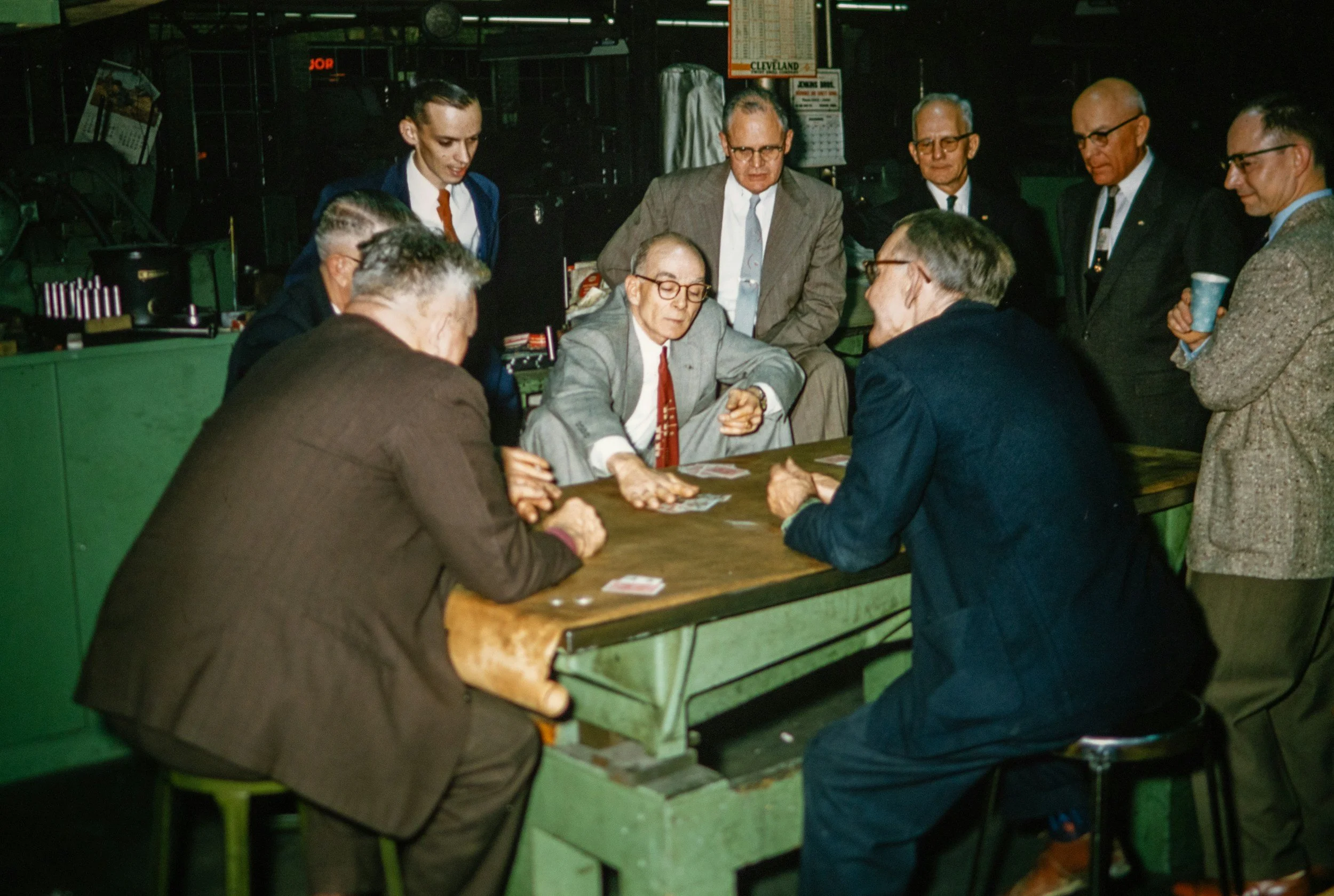
These experiences Great Grandma and Grandpa went through shaped their values. Think security, stability and duty. These parents weren’t encouraging their children to follow their dreams the way yours were, Zee. They were telling them to focus on finding something stable. Get a good job, stay out of trouble, buy a house, raise a family and build something that lasts. And compared to war, that sounded pretty darn good.
Boomers grew up in a world that was still actively trying to rebuild itself. Canada in the 1950s and early 60s was post-war, expanding and heavily focused on stability. Growing up, you knew your neighbourhood, your school and your street. Your friends were whoever lived nearby and showed up at the same park or classroom. Parents, teachers, coaches and employers weren’t just guidance figures, they were structures of a system, and you didn’t question the system.
Home life reflected that same simplicity. Many households ran on a single income (which was affordable then!). Roles were more defined, routines were more rigid and expectations were clearer. Entertainment wasn’t endless and on-demand. You watched what was on TV (if you had a TV) only when it aired and you went outside because that’s where everything else was. There was less choice, but also less noise.
By the time many Boomers entered their first jobs in the late 1960s and 70s, that same structure carried forward into work. Work was something you physically went to. You clocked in, you showed up and you stayed in your role. That first job often came with a very clear sense of direction.
Boomers entered the workforce during one of the most significant periods of economic expansion in modern history. Industries were rapidly expanding, manufacturing was strong, unions (I’ll save my opinions about unions for another letter) were highly influential and pensions were a common work incentive.
They developed a very different relationship with work than younger generations. While yes, it was a source of income, it was also largely about identity. That job represented security, contribution, adulthood and status. You joined a company, learned the ropes, climbed the ladder and you stayed there. Many Boomers spent decades with the same employer because loyalty often produced significant tangible rewards (what do you get now for years of service Zee? A shout out on Slack and a coffee giftcard?)
To Boomers, this loyalty explains a lot of why they’re struggling so much with some modern workplace concepts:
Flexibility can be viewed as entitlement because they spent decades proving commitment through physical presence .
Mental health conversations are often seen as a contradiction to the ‘push through it’ environment they worked in. And bringing private struggles into the workplace was never a part of work culture.
Remote work is often viewed as a loss of visibility, shared effort and weakened workplace culture.
Job hopping signals a lack of loyalty or staying power because careers were traditionally built on long tenure.
Boomers believe hard work creates opportunity because, in their lived experience, it often did. Younger people genuinely believe the system no longer delivers on those promises, because in their lived experience, it often doesn’t. Neither perspective is wrong. The problem is, they’re both describing their respective economy.
Yes Zee, housing was relatively affordable compared to income. (I know the house thing is a sore spot for you, and I don’t blame you!) Essentially as a Boomer, if you graduated from school, found a decent employer and worked hard, there was a pretty clear pathway toward home ownership, financial stability and retirement.

I’d be remiss if I didn’t talk about just how many places there are for you to spend your money compared to Boomers. When they were starting out, many things we/you spend money on today, simply didn’t exist. No streaming services, no food delivery app, no smart phones, no online shopping and no monthly subscriptions (except maybe the odd newspaper or magazine).
So here’s something to ponder. Was financial discipline different? Or were there simply fewer opportunities to spend disposable income? The answer is probably a bit of both. My daughter is actually quite good at saving money, but she’s also incredibly good at booking spontaneous vacations to other countries.
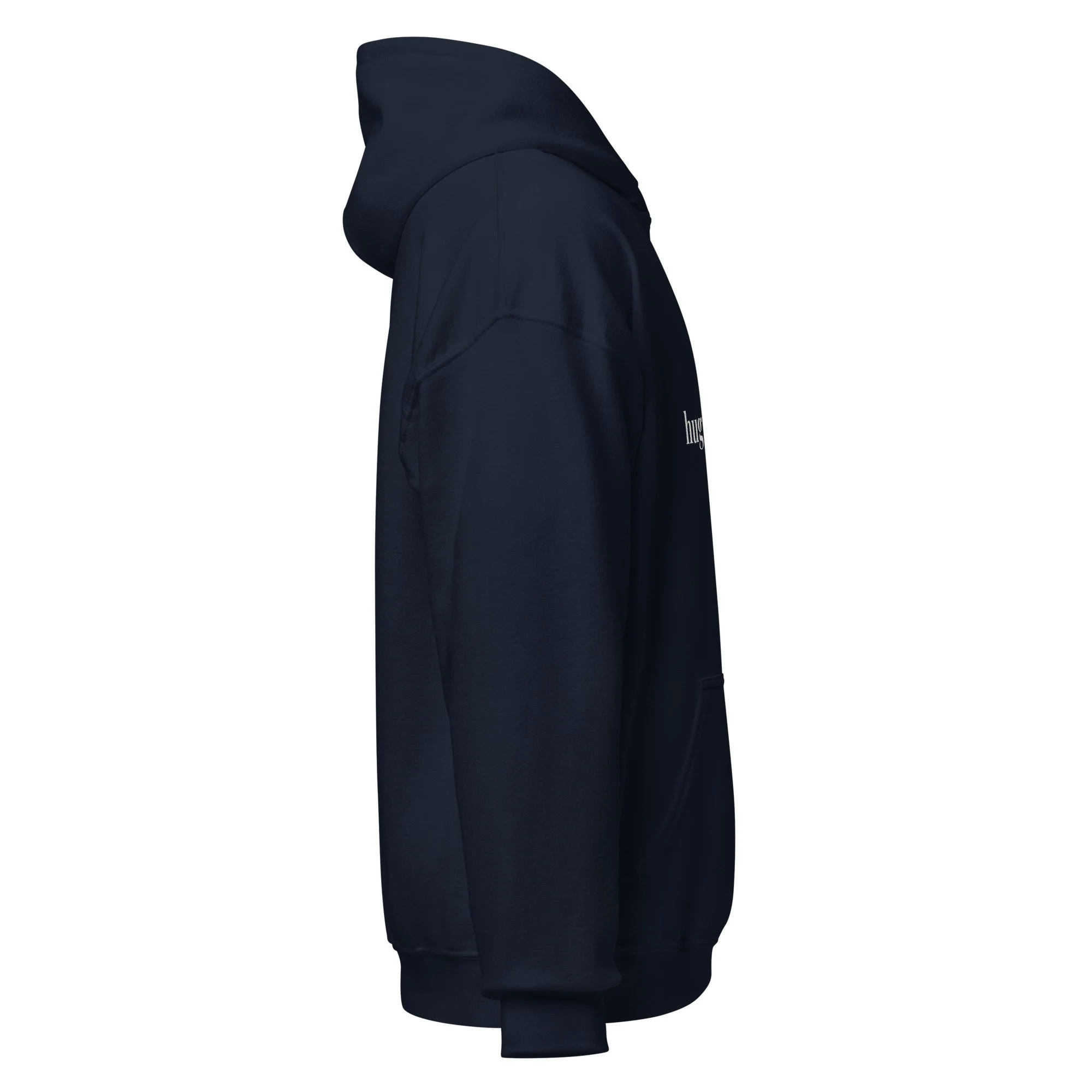
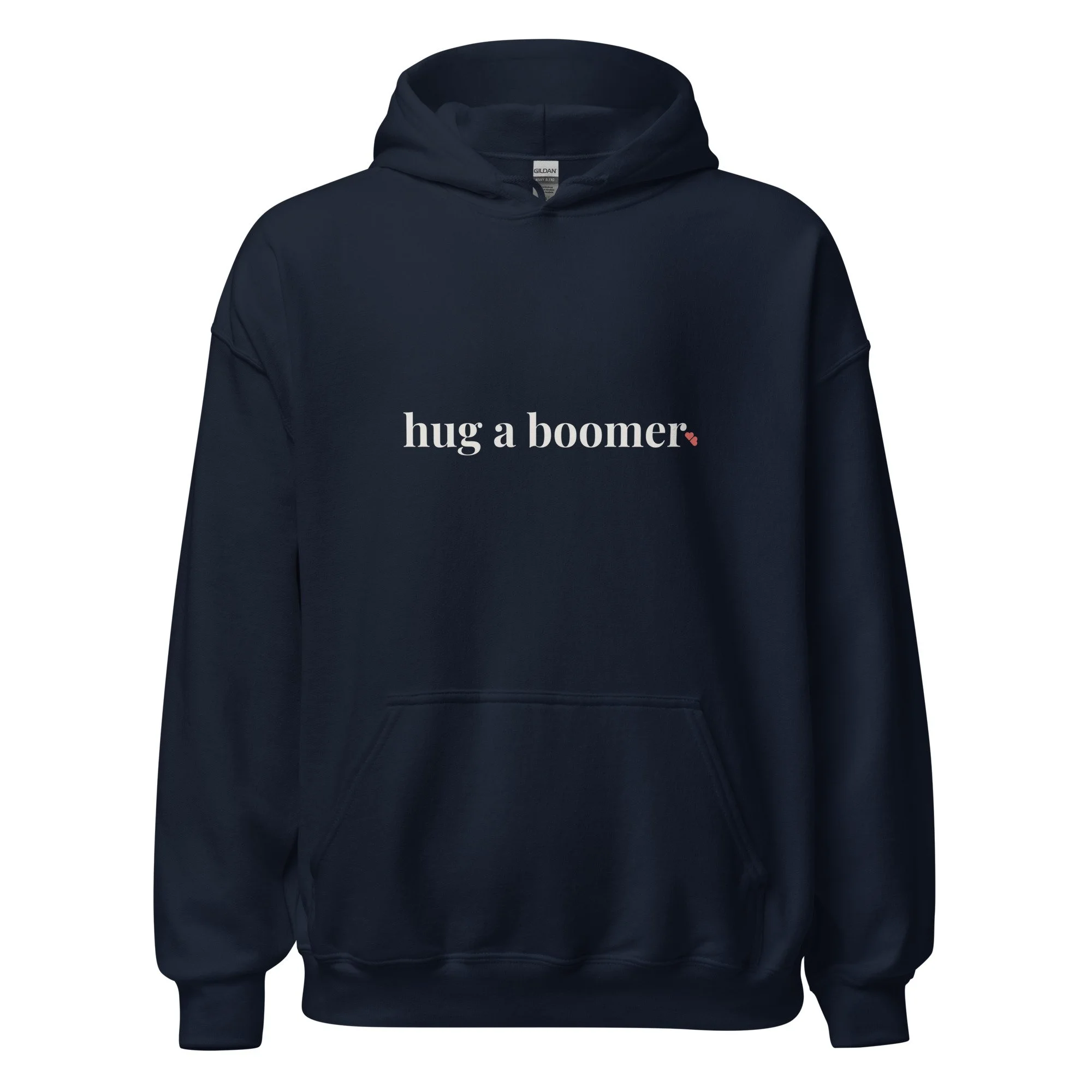
A unisex hoodie, the coziest way to start a conversation.
why hug a boomer?
Connection over conflict. Curiosity over assumptions.
Every generation has something to teach and something to learn. The Hug a Boomer collection is a lighthearted reminder that the future of work isn't about choosing sides, it's about choosing conversation.
Whether you're Gen Z, Millennial, Gen X or Boomer, these pieces are designed to challenge stereotypes, spark meaningful dialogue and prove that respect never goes out of style.
Because sometimes the biggest workplace innovation is simply listening to one another.
Specs:
• Dark Navy is 40% cotton, 60% polyester
• Fabric weight: 8.0 oz/yd² (271.25 g/m²)
• Air-jet spun yarn with a soft feel and reduced pilling
• Double-lined hood with matching drawcord
• Quarter-turned body to avoid crease down the middle
• 1 × 1 athletic rib-knit cuffs and waistband with spandex
• Front pouch pocket
• Double-needle stitched collar, shoulders, armholes, cuffs, and hem
• Blank product sourced from Bangladesh, Nicaragua, Honduras or El Salvador
I think every generation truly believes they would have made better decisions if they had lived through another generation’s circumstances. But remember that whole, we are a product of our environment thing? If Gen Z was raised in the 1940’s - 1960’s, you probably would have turned out exactly like your great grandparents. Boomers were raised by people who survived war. Gen Z was raised by people who survived burnout. Of course you’re both going to look at work differently.
If I could offer one piece of advice, Zee, it would be this: spend less time arguing with Boomers on the internet and more time learning from them in real life. They're called "the mentors" for a reason. They carry decades of institutional knowledge, hard-earned experience and stories from a version of Canada that no longer exists. Whether you agree with them or not, there's value there. By 2030, every Boomer will be over 65. Many will retire, and when they do, they'll take a remarkable amount of knowledge with them. This is the kind of knowledge that doesn't live in textbooks, corporate training manuals or ChatGPT.
So ask questions. Listen carefully. Maybe even hug a Boomer. (Am I allowed to say stuff like that? Maybe I’ll put it on a hoodie!) I promise you this, one day, you'll be the older generation wondering why the kids aren't doing things the way you did them. And trust me, they'll have opinions about you too.